


Rev. Dr. Julie Mavity Maddalena has many titles at Lakeland University, and she wouldn’t want it any other way. The university’s designated chaplain, the assistant professor of philosophy and religion, and the director of the Ulrich Center for Faith, Ethics, and Justice are all roles that she fills on campus.
Julie, as she insists to be referred to by her first name, describes her work as a “unicorn of a job.” She expanded on this idea by mentioning: “I get to do all the things I love and find meaningful. My favorite thing is to feel like I can help our community members feel heard, seen, valued and loved. And that I can help us all learn how to understand and support each other in our efforts to make the world a place where all can thrive.”
As the director of the Ulrich Center and being the Ulrich Ethicist in Residence, Julie plans and supports events on and off campus “that explore pressing moral and social issues of our time and uplift lived experiences of marginalized persons and groups.” She also supports the university’s efforts to live up to their mission relations with the United Church of Christ in various ways. To do this, she co-leads Lakeland’s “Safe in the Lake” LGBTQIA+ ally training and similar acts in the surrounding community.
In addition to her campus involvement, Julie is a volunteer fire department chaplain for the Sheboygan Fire Department. Her husband, who she met in an EMT class he was taking as a volunteer firefighter, was her inspiration behind keeping up her volunteer work as the fire department chaplain. She loves getting to ride along on the ambulances and fire trucks, emotionally supporting the fire fighters, and being able to hang out and learn about the department.
Before moving to Lakeland seven years ago, Julie had lived in Massachusetts, where she was faculty and chaplain at a boarding school high school. She grew up in Texas but also lived in Colorado and Georgia for periods of time before finding her way here. Wisconsin wasn’t originally on her radar but once presented with the opportunity to apply for a position at Lakeland University; she couldn’t skip the chance. After visiting, Julie loved the job, the university and the climate of Wisconsin, so she hasn’t left since.
Julie’s passion for social justice runs deep within her background. Many of her life experiences — visiting concentration camps in college; living in a homeless shelter for women and children in Atlanta; first-hand witnessing sexism, exclusion, and inequality; walking with her friends of color; having children with disabilities — have driven her to advocate on behalf of vulnerable communities.
“It’s a deep part of my understanding of what my Christian faith is about — of what it looks like to love my neighbor.” She continued by quoting theologian Cornel West, “Justice is what love looks like in public.” Julie acknowledges that since she “believes in a God who is Love, then [she has] to work for justice.”
Her educational background began with double majors in both history and biblical studies, then a Master of Divinity degree, and finally a Ph.D. in religious studies with a concentration in religious ethics and a certificate in women’s and gender studies.
That experience now informs the classes that she teaches in ethics, religion and social justice studies. All these disciplines challenge students with difficult questions about the moral and social concerns shaping the world today.
Julie admits that balancing it all wasn’t always easy. At college, she juggled athletics, was in a sorority, worked and was involved in many other activities. But the most challenging part for her was that she went to a college that didn’t support women in religious leadership goals. She mostly only had male peers in her courses and all of her professors were men. She reflects on this by stating that she “missed out on connections, opportunities and relationships [that her] male peers had” which led to limitations on placement options for required summer internships. It also kept her from becoming comfortable with public speaking, which is key in the career she was striving for, because she lacked the experiences that the men in her classes got before her.
Despite the challenges she went through, Julie is thankful that she has had so many incredible people to surround herself with. “I’ve been very fortunate,” she said. “I’ve had family, talent, and support that have allowed me to do what I feel I am called to do. I also had some incredible mentors who went out of their way to support me,” she said. “That’s one of the reasons I like getting to serve Lakeland students — I understand how much of an impact that had on me so I hope to pay that forward.”
When prompted about what she would change about Lakeland University, Julie stated that she would have “magic signs over everyone’s heads, so that [she] always knows the person’s name.” Her reasoning behind this was: “Names are so valuable, and I hate to forget them because people are important to me.”
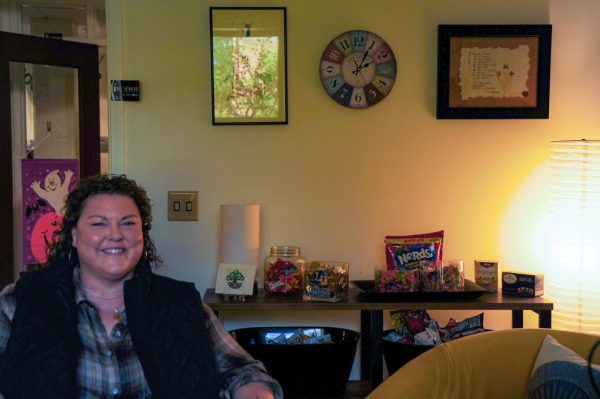
Julie wants to extend her gratitude to everyone who works for and attends Lakeland University. She mentions that she loves the students and wishes they visited her in the Ulrich Center more. “You’re never wasting my time — I love hearing about you, urging you on and cheering for you. Just call on me if you ever need anything, anything at all. Anybody is invited to drop by my office — I’ve got candy and snacks!”
marvin Hines • Nov 8, 2025 at 1:54 pm
Its great to hear about your accomplishments. I’m a tennis player and seem to remember you accomplished quite a lot on that court. I am proud to know you and see this post.